
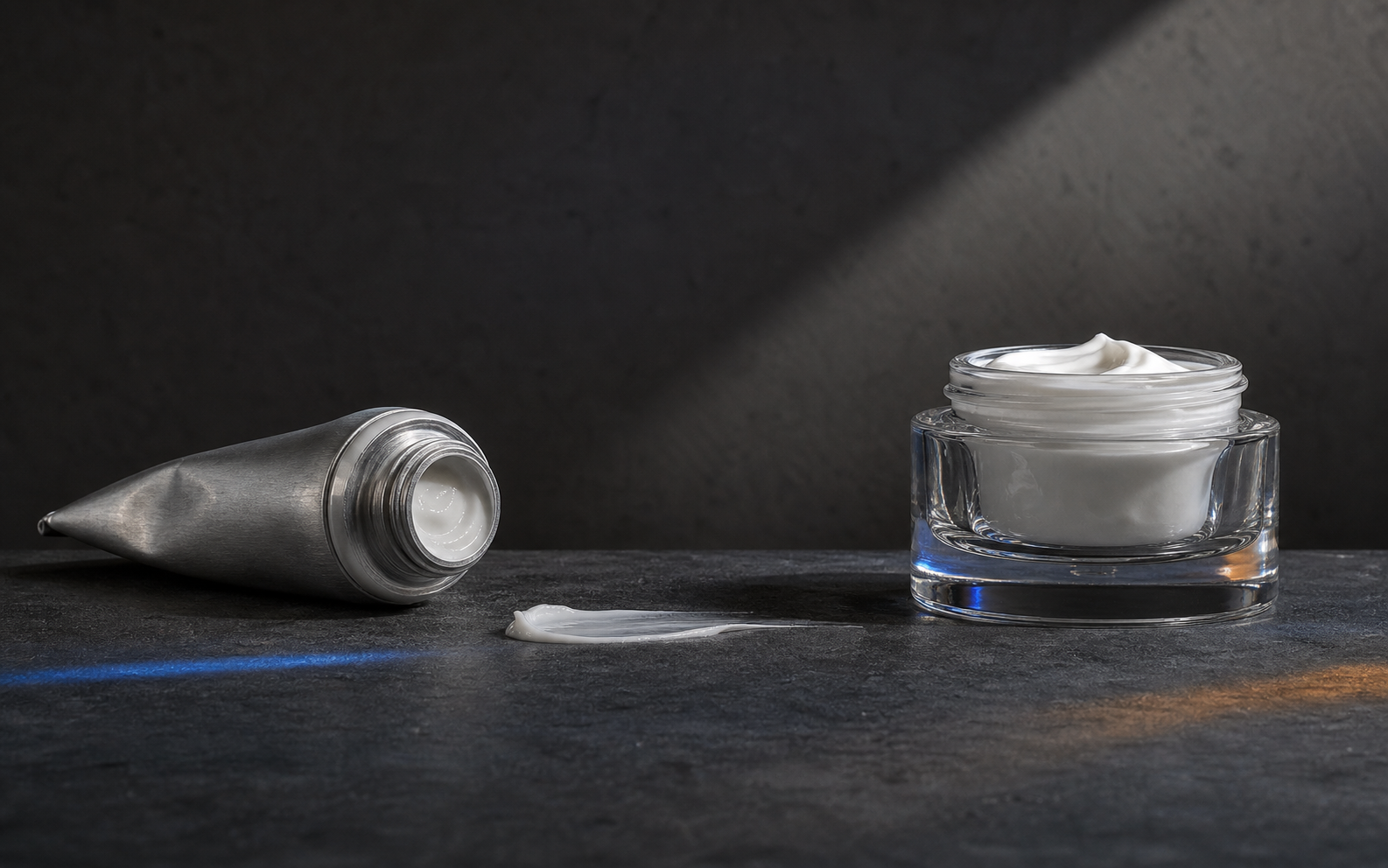
One moisturizer costs $20. Another costs $200. The second may feel better, look better on the shelf, and come in a heavier jar. It is not automatically ten times better for your skin.
Sometimes a higher price pays for real formulation work. Sometimes it pays for fragrance, packaging, advertising, and a story. The useful question is not “Is luxury skincare a scam?” It is: “What am I paying extra for, and does that part matter to me?”
What can be worth paying for?
Formula stability
Vitamin C, retinoids, and some antioxidants are sensitive to air, light, and heat. The vehicle and packaging can matter as much as the ingredient name.
Tolerability
A strong active is not useful if the formula makes you stop after a week. Better buffering and supporting ingredients can make consistent use easier.
Texture
Fast absorption, no pilling, less shine, and no white cast can be worth money when they determine whether you actually use the product every day.
Testing and transparency
Human testing, disclosed concentrations, clear endpoints, and usable packaging are more meaningful than vague language about “advanced technology.”
A high price is not evidence
In the United States, cosmetic products and most cosmetic claims are not reviewed by the FDA before sale. “Clinical,” “medical grade,” and “lab-developed” should make you look for the data, not stop asking questions.
Where you usually do not need to spend big.
Cleanser
A cleanser is rinsed away quickly. Gentle cleansing without tightness or irritation matters more than rare extracts in the ingredient list.
Basic moisturizer
Glycerin, petrolatum, ceramides, and squalane are established ingredients, not luxury materials. Moisturizers can perform differently because of their composition, but price alone does not tell you which one will work best.
Basic sunscreen
Broad-spectrum protection, sufficient application, and reapplication come first. Paying more can make sense for a formula that does not sting, leave a cast, or feel greasy, because comfort affects consistency.
Where paying more can make sense.
Consider spending more on unstable active formulas, sunscreen you will happily wear every day, or a product that solves a specific tolerance problem. Do not spend more simply because the ingredient list is longer. More complexity can mean more opportunities for irritation.
The four-question test
- Does it address a problem I actually have?
- Are the active, concentration, or test results explained clearly?
- Does the packaging protect the formula?
- Will I realistically use it for three months?
If the answers are unclear, the price is doing more work than the evidence.
Bottom line
Expensive skincare is not automatically wasteful, and affordable skincare is not automatically basic. Pay for formulation, tolerability, and consistency when they make a real difference. Do not pay extra just to feel that you bought stronger results.
The best product is not the most expensive one. It is the one with a sensible formula that your skin tolerates and you keep using.