
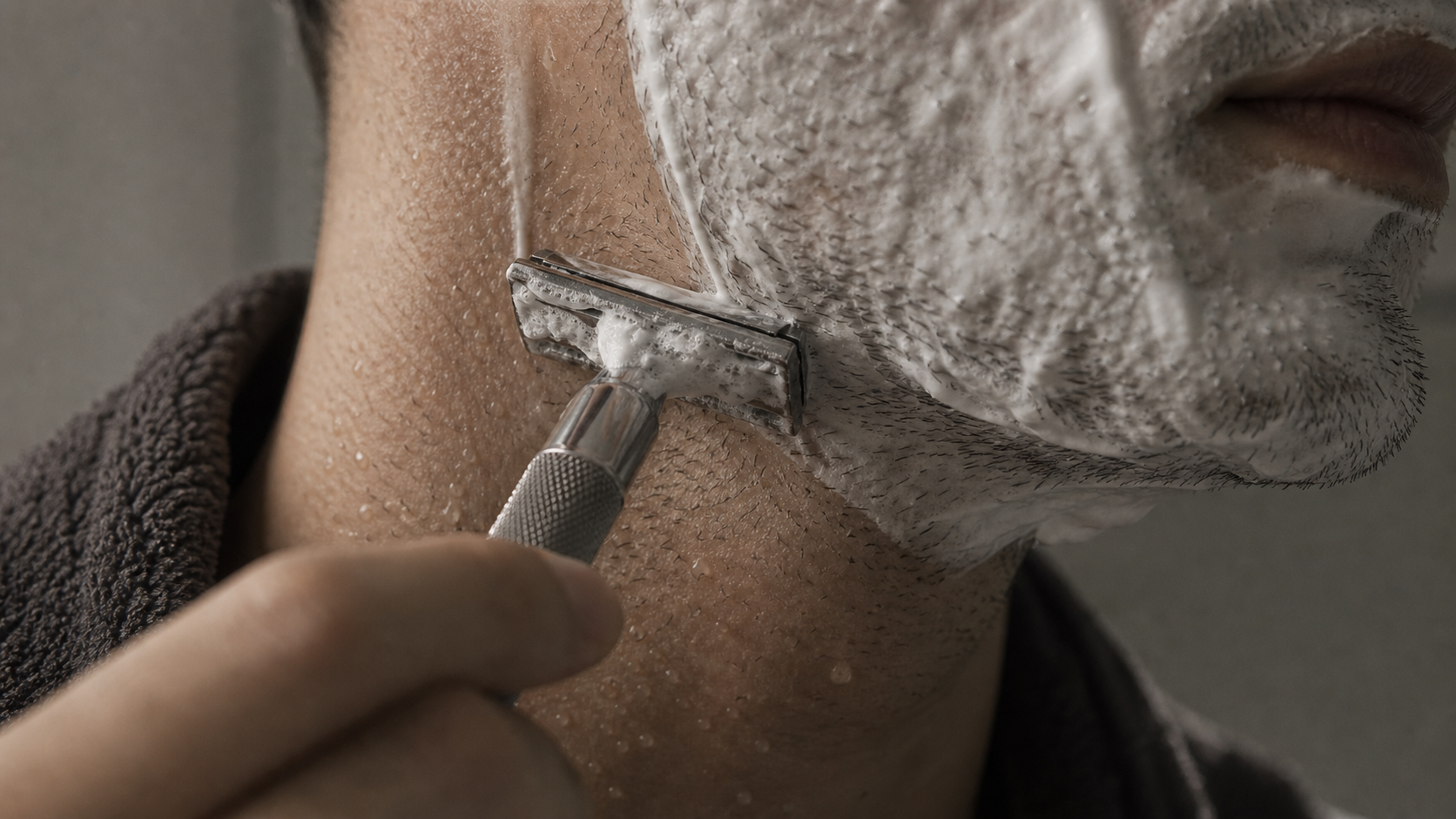
Razor burn and razor bumps often get blamed on “sensitive skin,” but they are not the same thing. Razor burn is usually irritation from shaving itself: friction, pressure, dry shaving, a dull blade, shaving too fast, or shaving against the direction of growth. Razor bumps are usually ingrown-hair driven: short hairs curl back into the skin and create small, pimple-like bumps.
That difference matters. If you treat every post-shave problem like dryness, you miss the hair-growth problem. If you treat every bump like acne, you may irritate the skin even more.
Razor burn
Looks more like a red, irritated, hot, stinging rash shortly after shaving.
Razor bumps
Look more like small bumps or ingrown hairs, often appearing as hair grows back.
Burn strategy
Reduce friction, pressure, and irritating products. Calm the barrier.
Bump strategy
Reduce close cutting, prevent hairs from curving inward, and consider medical help if persistent.
Why some men get bumps more often
Razor bumps are more common when hair is coarse, tightly curled, or grows at sharper angles. The cut hair can curve back into the skin as it grows, which triggers irritation and inflammation. This is why the issue is especially common in men with curly facial hair, including many Black men.
This is not a hygiene failure. It is hair geometry meeting a very close shave.
If it is razor burn
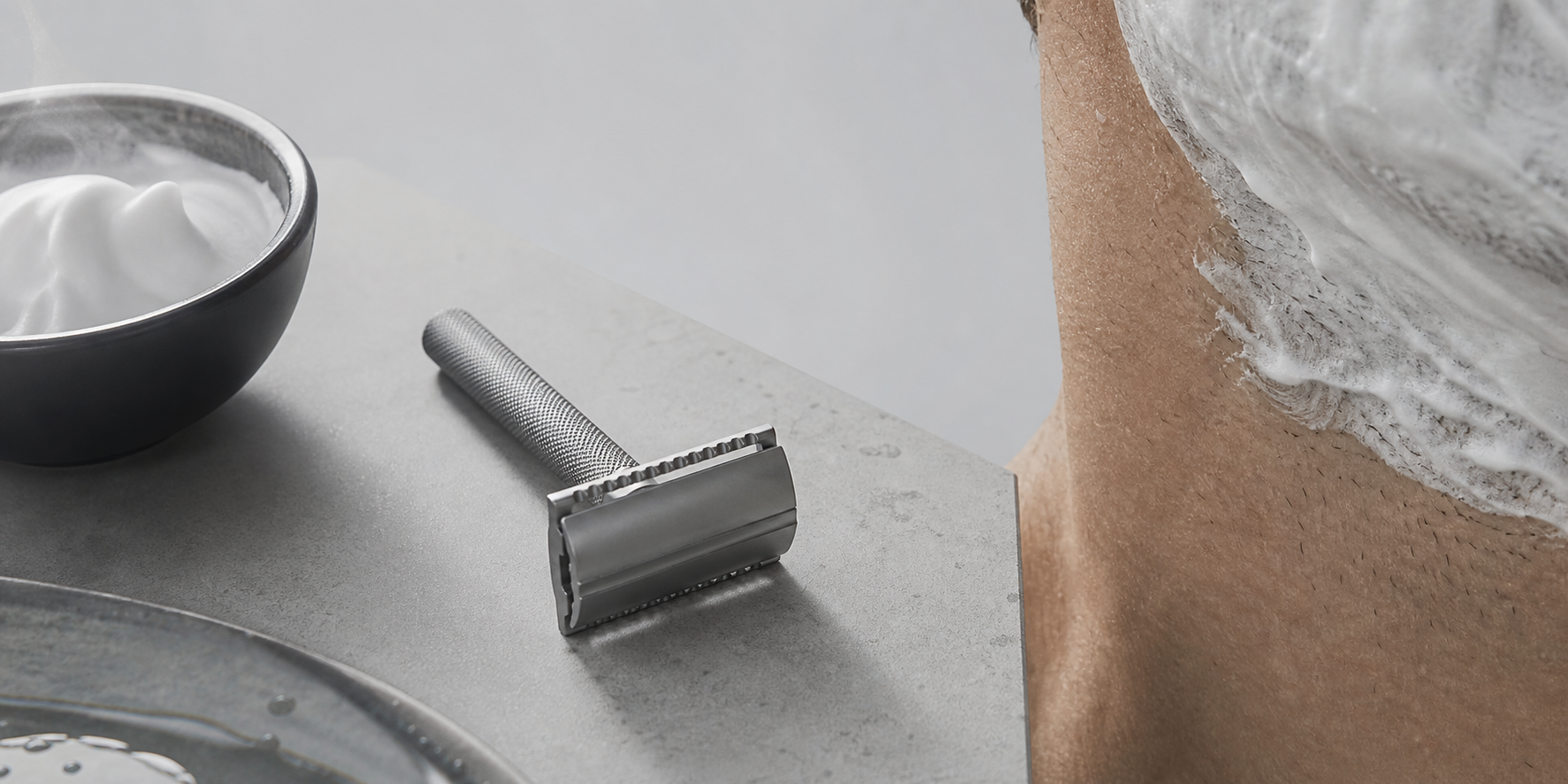
Make the shave less aggressive. Wet the skin and hair first, use enough shaving cream or gel, shave in the direction hair grows, rinse the razor often, and change dull blades. After shaving, skip alcohol-heavy burn-for-a-second products if they make the skin feel worse.
Razor burn reset
- Shave after a shower or after warm water softens the hair.
- Use light pressure and fewer passes.
- Do not chase perfect smoothness on red skin.
- Rinse with cool or lukewarm water.
- Use a simple moisturizer; save retinoids and acids for another night.
If it is razor bumps
The fix is usually about not cutting hair too close. Consider an electric trimmer, a guarded clipper, shaving with the grain, avoiding skin stretching, and not pressing the blade hard. If bumps are frequent, painful, scar, or leave dark marks, a dermatologist can help; sometimes medical treatment is needed.
Razor bump reset
- Do not stretch the skin tight while shaving.
- Shave with the grain, not against it.
- Avoid repeated strokes over the same area.
- Try not shaving as close, especially on the neck.
- See a dermatologist if bumps persist or scar.
What not to do
Do not scrub aggressively. Do not keep shaving over active bumps until they bleed. Do not pile acids, retinoids, fragrance, and alcohol onto freshly shaved skin just because it feels “clean.” Too many fixes can become the problem.
For most men, the better strategy is less drama: softer hair before shaving, better slip during shaving, calmer skin after shaving, and fewer aggressive passes.
Key notes
- Razor burn is mainly irritation; razor bumps are often ingrown-hair driven.
- Curly or coarse hair can make bumps more likely.
- Closer is not always better for skin.
- Actives can wait if your face is freshly irritated.
- Persistent, painful, scarring, or unusual bumps belong with a dermatologist.