
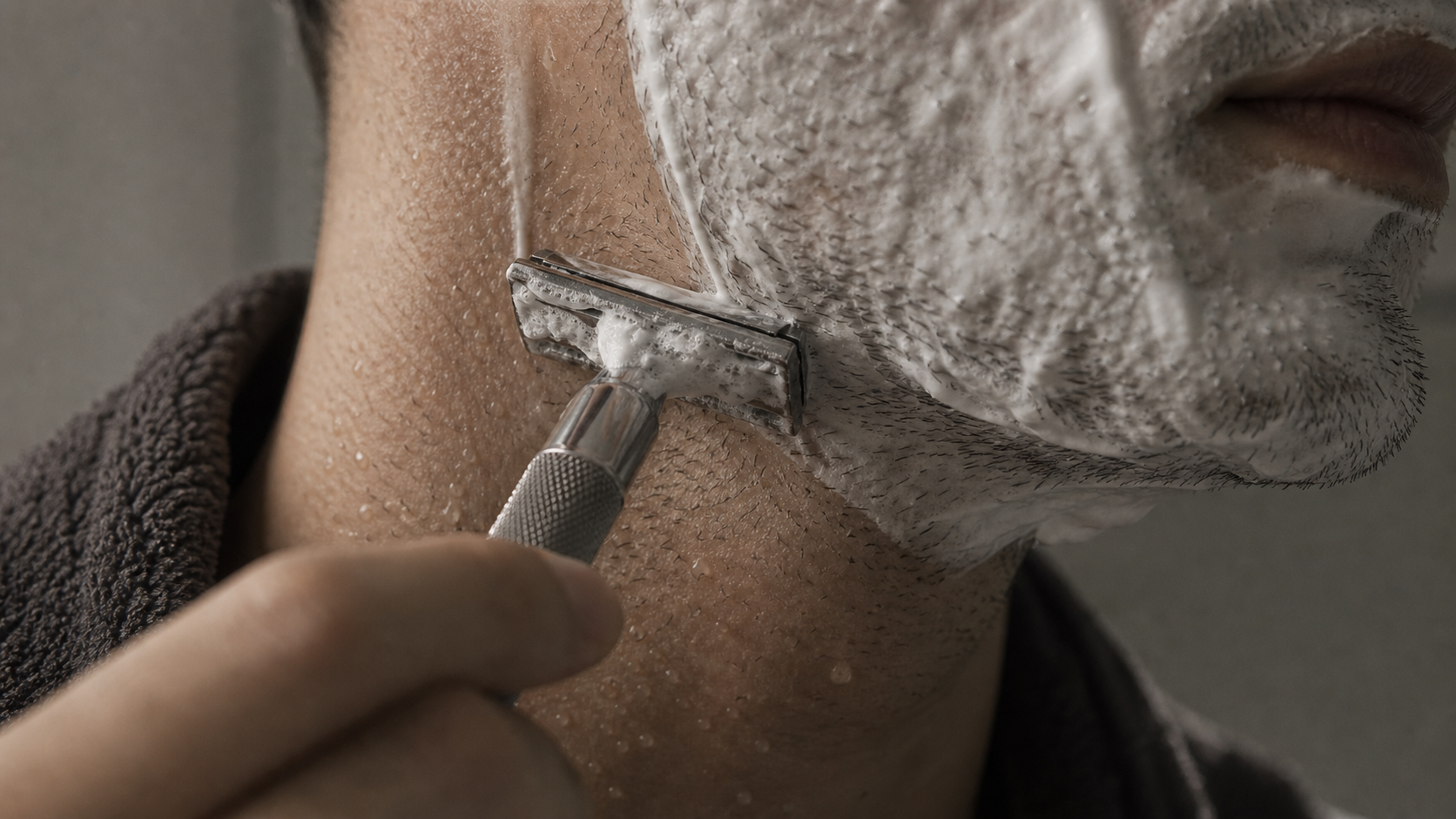
Shaving Guide
The goal is not the closest shave. It is the least damage.
For many men, shaving is the most repeated skin stressor on the face. A blade passes over the same area, removes hair, disrupts the surface, and can leave the skin feeling tight, hot, or reactive. If this happens several times a week, the skin is not being dramatic. It is responding to repeated friction.
A better shave starts before the blade touches skin and continues after the rinse. Think less force, more slip, and more recovery.
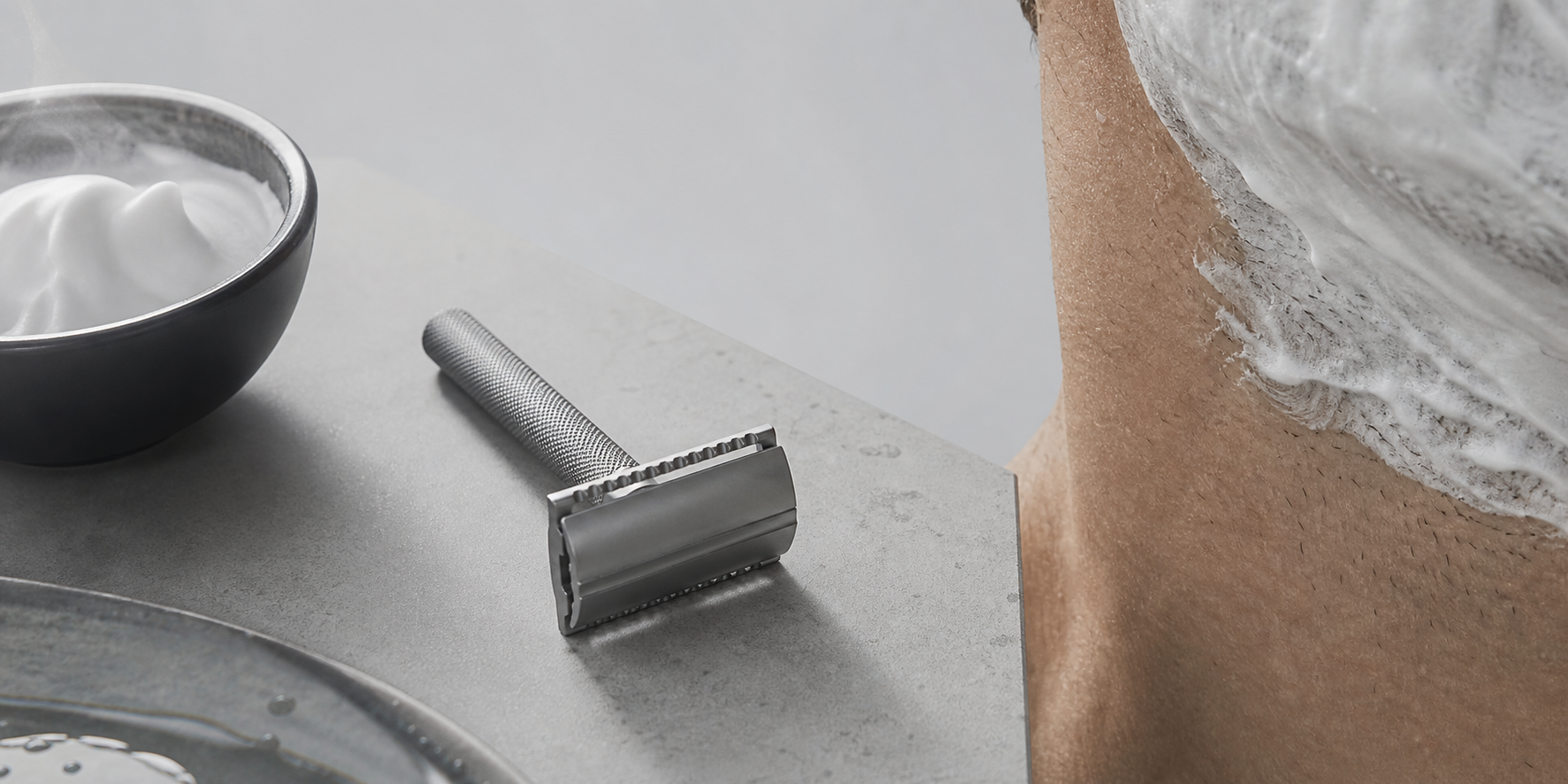
Before shaving: reduce resistance
- Soften first. Shave after a warm shower or rinse with warm water for a minute. Hard, dry hair increases drag.
- Use enough lubrication. Foam, gel, or cream should create slip, not disappear on contact.
- Let the blade do less work. Use light pressure. Pressing harder does not make the shave smarter.
Blade choice matters, but technique matters more. A dull blade, repeated passes, shaving against the grain too aggressively, or rushing over the neck can all create irritation. The neck and jawline often need the most restraint because hair direction changes there.
During shaving: fewer passes, less pressure
- Start with the grain before considering a closer second pass.
- Rinse the blade often so hair and foam do not create drag.
- Do not chase every last rough patch if the skin is already red.
After shaving, the priority is not a burning, icy, alcohol-heavy finish. That sensation can feel clean, but it may not be helping irritated skin recover. Post-shave care should calm, hydrate, and support the barrier.
Niacinamide
Useful for barrier support, visible redness, and oil balance.
Ceramides
Helpful when skin feels dry, tight, or repeatedly irritated.
Azelaic acid
Can support redness and post-breakout marks, but avoid using it directly on freshly irritated skin.
Salicylic acid
May help clogged pores or bumps, but use on non-shave nights if you are easily irritated.
What to avoid right after shaving
Be careful with strong acids, high-strength retinoids, heavily fragranced aftershaves, and alcohol-heavy products immediately after shaving. These are not automatically bad, but freshly shaved skin is less tolerant. If something stings every time, your skin is giving feedback.
If you use retinol, exfoliating acids, or acne treatments, put them on nights when you are not freshly shaved, or apply them away from areas that are already irritated. Consistency beats aggression.
Simple post-shave sequence
- Rinse with cool or lukewarm water.
- Pat dry. Do not scrub with a towel.
- Use a calming moisturizer or lightweight barrier cream.
- In the morning, finish with broad-spectrum SPF.
- Save stronger actives for a different night if skin is reactive.
A good shave should leave skin calm enough to continue the day.
Build your routine around shaving